“Relying on deft genetic engineering and ancient, preserved DNA, Colossal scientists deciphered the dire wolf genome, rewrote the genetic code of the common gray wolf to match it, and, using domestic dogs as surrogate mothers, brought Romulus, Remus, and their sister, 2-month-old Khaleesi, into the world during three separate births last fall and this winter—effectively for the first time de-extincting a line of beasts whose live gene pool long ago vanished. TIME met the males (Khaleesi was not present due to her young age) at a fenced field in a U.S. wildlife facility on March 24, on the condition that their location remain a secret to protect the animals from prying eyes.”
Consequent upon the information reported in our last Proceedings, another search was made in the wilds of Tasmania for evidence of the existence of this almost extinct Marsupial.
Thanks have been transmitted to the Tasmanian Board for its generosity in allowing M:. M. S. R. Sharland the opportunity of first hand knowledge of the position. Apparently
The expedition was fitted out by the Tasmanian Animals and Birds’ Protection Board, and as a guest, Mr. M S. R. Sharland accompanied it. A full account will be published in the Proceedings, from which it will be seen that new footprints were observed more than once indicating that more than one individual still survives in the locality searched.
Mr. Sharland upheld the traditions of the Society as the Tasmanian Board has renewed its invitation to their next research expedition.
It is a matter of regret that no animals were seen but this is mainly due to the nocturnal habits of the marsupial.”
This Information was printed in the Proceeding of the Royal Zoological Society of New South Wales for the year 1938
It’s a cold Thursday afternoon and while I’m sitting reading along on WordPress I see the 5 things I do for fun.
My first thought is clearly scrolling through WordPress must be one of them. But this isn’t something I do daily. But the phone in general is one of the 5 things, if I’m not on this it’s one of the other many apps.
I try to start every day, even in winter months with a walk in the woods. When I get home it’s snuggling the dog, because he just gives me unconditional love and peace, he’s my best thing.
Other things I like to do are writing, especially poetry, but I also enjoy writing about different Fortean, nature and history subjects.
I love reading, so going to the library is a favorite winter hang out. And I also love taking my Cannon Rebel out with me on my adventures and snapping some pictures. I really enjoy the editing process as well.
In general I like to keep busy somehow mentally and physically, if the sun is shining outside though, the first thing I’ll always want to do is get outside. I’ll always that call of the wild…
The Wolf Moon, the first full moon of January which shined down on us last night, carries with it a mystique that’s been woven into folklore and legends across cultures.
In Native American traditions, it is named after the hungry howls of wolves heard during the frigid winter months. These howls were thought to signify the wolves’ yearning for the sustenance and warmth that the cold, barren landscape lacked. This moon marked a period of hardship and endurance for both the wolves and the people who lived alongside them.
In other cultures, the Wolf Moon is associated with transformation and inner strength. Legends speak of mythical creatures that were said to roam under this luminous moon, including werewolves, who would shift from human to wolf under its silvery light. The eerie glow of the Wolf Moon was thought to awaken a primal instinct within, urging individuals to connect with their wild, untamed nature.
There are also tales of spiritual awakenings and mystical encounters happening beneath the Wolf Moon. It’s a time believed to be ripe for introspection, releasing old habits, and setting intentions for the year ahead. Some legends even suggest that the Wolf Moon opens a portal to the realm of spirits, allowing for communication between the earthly and the otherworldly.
It’s fascinating how a single celestial event can inspire such a rich tapestry of stories and beliefs!
And sadly, I apologize that I wasn’t able to publish this last night due to a teeny hiking injury, but, better late than never! 🌕🐺✨
“Baum, who was in the woods late in the afternoon with his stepfather to build the tree stand for future hunting use, said he immediately knew what he was seeing. Though it was late afternoon, it had been a bright, sunny day, he said.
In other words, the visibility was excellent in the area near Hanley and Woodville Roads, just east of I-71, especially with no leaves on the trees.”
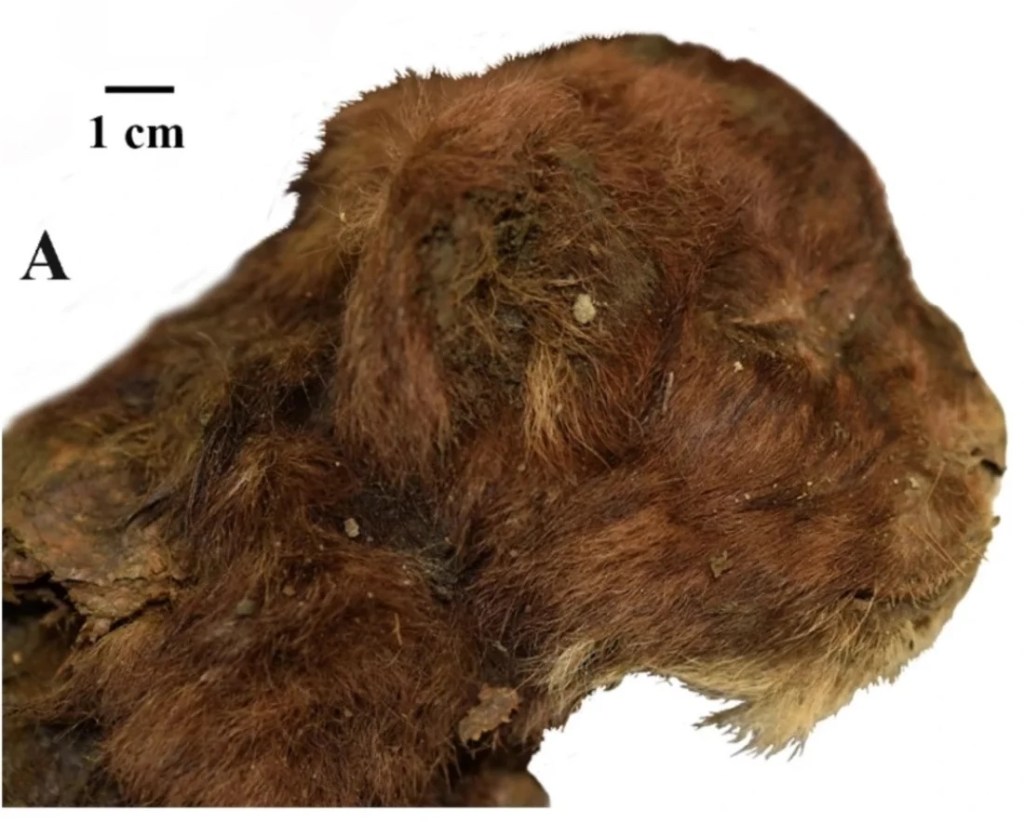
An ancient cat was found almost perfectly preserved in Siberia’s permafrost.
Researchers found the mummy of a 35,000-year-old saber-toothed cub in what is now Russia’s northeastern Sakha Republic, also known as Yakutia, in 2020
The kitten still had its whiskers and claws attached when it was pulled out of the permafrost, and was covered in a coat of “short, thick, soft, dark brown fur.” Its hair was about 20 to 30 millimeters long, according to researchers.
Sadly, we will probably hear they are going to attempt to bring them back from extinction as well, along with the wooly mammoth and thylacine tiger. We can’t even stop the current extinctions of today’s animals we are causing and they want to add to the crisis. We’ll have to wait and see what comes of it down the road…
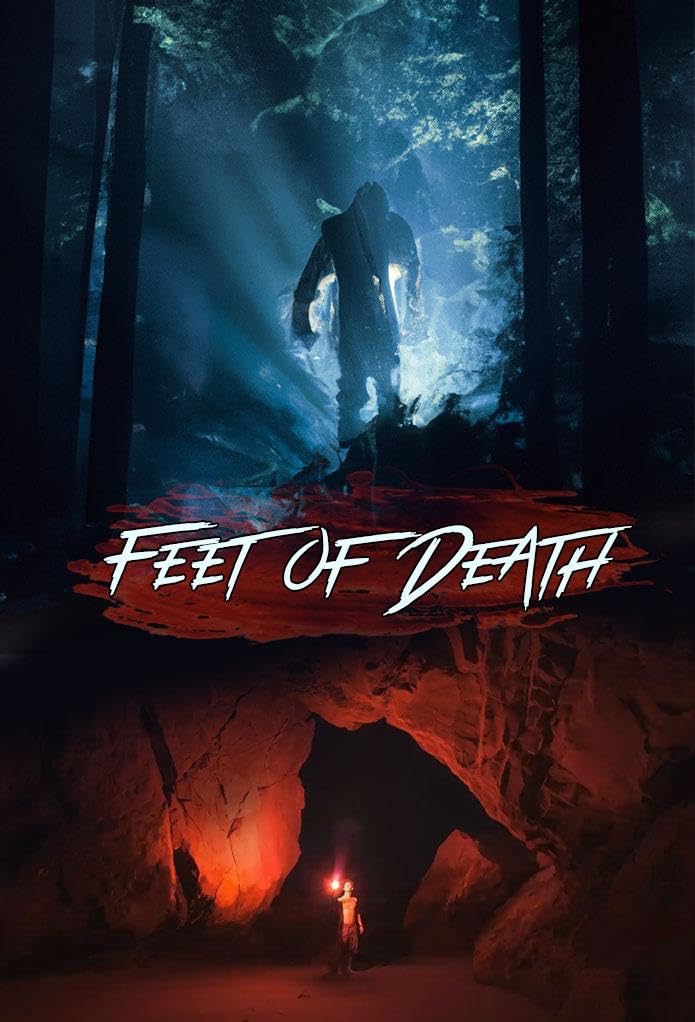
It’s a Sunday morning and I’ve got my coffee, chihuahua and remote and I’m setting in for a movie. This morning’s watch is Feet of Death. A new bigfoot genre horror from independent film writer and director James Chick, whose past work include the television show Grimm.
If you’ve been following me for a bit you know I love indie bigfoot movies. They are always entertaining and I’m always impressed when someone can make their movie their way, at usually great financial cost to themselves.
One of the things I love about bigfoot movies is looking at their shooting locations. This movie was filmed around Mount St. Helens in the Pacific Northwest making for a beautiful backdrop worthy of a bigfoot film.
The movie opens with a hiker stumbling on a dead body, which we learn is one of many found in this area. But this body is one of a Fortean investigator, played by Eric Berger who is there to do a story on these particular disappearances for his channel, Myths of the Unknown and tragically ends up among the body count.
We then meet the USFS investigator who is the best at animal tracking and identifying, played by Andrew Jacob Brown who teams up with the local sheriff, (my favorite character) played by Jack Vanover to confirm these are actually animal related. The USFS character is struggling to work through the death of his own wife from an alleged animal attack himself.
Now, I don’t want to give away any spoilers, as the film was just released, but there is a bit of a plot twist to this movie, leaving you to wonder if there is or isn’t a bigfoot out there. Which, if you’re either a bigfoot researcher or a enthusiast you’re already probably used to wanting to solve that mystery, and you’re going to have to hang in tight till the end to do it. But it is worth the watch, and if you like this genre of films as much as I do? Then you won’t be disappointed…
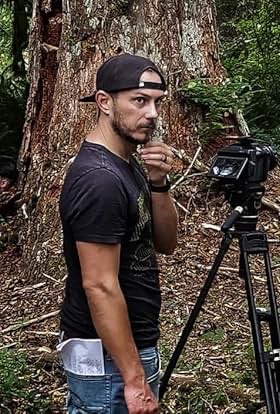
James Chick behind the scenes…
In addition to getting a chance to catch the movie, I was also able to catch up to James Chick and ask him a few questions about his film. Check out his answers below…
Q. What got you interested in making films?
A: Since I was a kid I always had a camera in hand. Back in middle school I would make music videos with my friends and sister using my dad’s VHS camera. Then in highschool I bought my very own Sony high-8 camera! I would film my friends and I doing whatever before vlogging was even a thing. So when I got to college it made since to pursue production as a career.
Q. What is your favorite part of the process?
A: Being on set filming is the most enjoyable and stressful part. It’s also the shortest part of the process unfortunately.
Q. What was this films experience like for you?
A: This was a crazy stressful, exciting, terrifying, and enjoyable experience for me. It was my first time directing so it was a brand new experience.
Q. What made you decide to make a film about Bigfoot?
A: I was born and raised in the PNW so Bigfoot is everywhere up here, and there is a massive global audience.
We have 5 acres out by Mt Saint Helens, where the film takes place. I also love creature features such as A Quiet Place. So it just made sense logistically and creatively to do a bigfoot film.
Q. Are you a believer in the possibility a bigfoot is out there?
A: I want to believe. But…. It’s hard to believe there is no good real evidence with all our tech these days.
Q. What was the biggest challenge making it?
A: Raising funds for the project as a first time director is always a challenge. And then finding distribution after it was completed was another aspect I was completely green at.
Q. Where was the movie filmed?
A: Everything was filmed on or around Mt Saint Helens.
Q. Do you have any future projects in the works?
A: I am in early stages for a fun sci-fi adventure in the vein of Firefly meets Alien…
I am looking forward to seeing that one, as both of those franchises are a favorite of mine and congratulations on a great directorial debut!
You can catch the movie on the links below on whichever your favorite platform is.