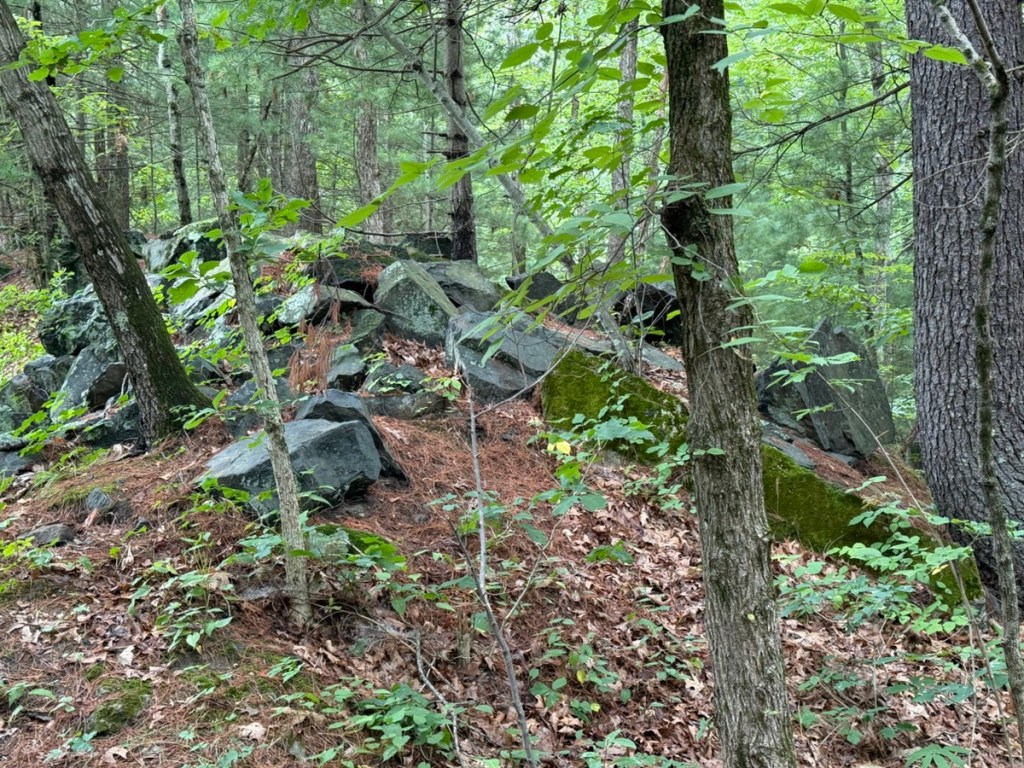
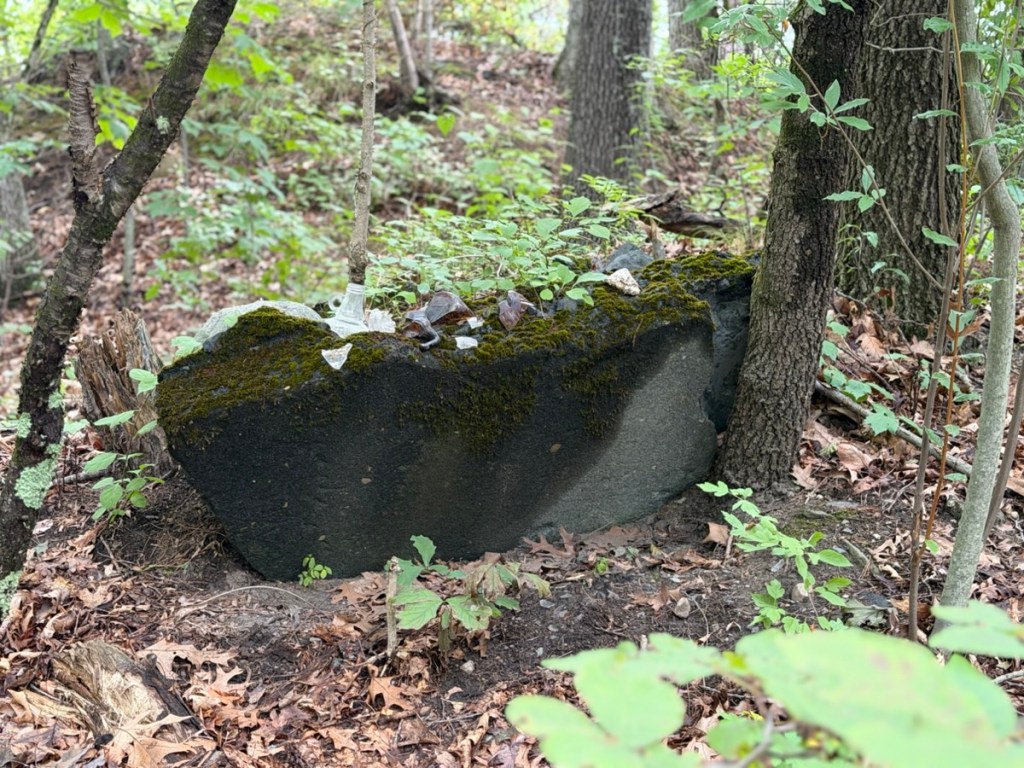
I was out for a stroll in Cumberland RI to grab some Cumberlandite for the sister and friend. Cumberlandite is a rare igneous rock made up of a high concentration of iron and titanium, making it magnetic.
Named the official state rock back in 1966, its primary home is a small 4-acre deposit at Iron Mine Hill.
The color is a dark brown to solid black with white or greenich speckles.
Because of its color and it being slightly magnetic some believed it was actually from a meteorite.
The local indigenous tribes, revered the stones as sacred and used it to fashion tools.
Back during the Revolutionary War the settlers attempted to cast cannonballs from it but the metal composition proved too weak and the cannons infamously cracked or exploded. Often called the cannonball debacle!
At one time it was used to create the Iron Mine Railroad, which operated for less than ten years to transport the mined Cumberlandite.
new Nessie sighting was made on the afternoon of July 9 by Eoin Fagan, who spied unusual moving objects submerging on the Visit Inverness Loch Ness webcam at Shoreland Lodges.
Commenting on the sighting, which was made at 3.26pm, the Official Loch Ness Monster Sightings Register said: “He said that one large singular object emerged from the water of Loch Ness way out in the loch and at the same time a sailing boat was hugging the northern shore heading north.
“A second large object emerged from the water a minute later behind the first one. The first one lay motionless, then the second object moved towards it and passed by close to it heading north, then the motionless object moved north in the same direction.”
You can read the rest of article from the Inverness Courier here:
Approximately 1.43-million-year-old hominin footprint from Koobi Fora, Kenya. Image Credit: Kevin G. Hatala.
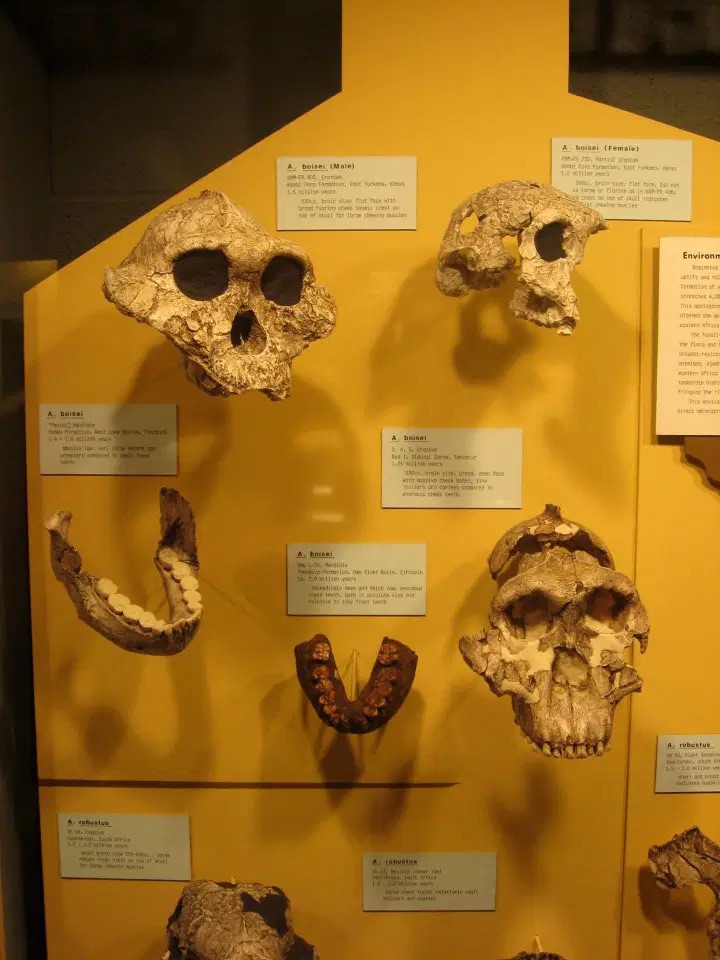
Paranthropus Boisei went for a walk over a million years ago left more than just a footprint…
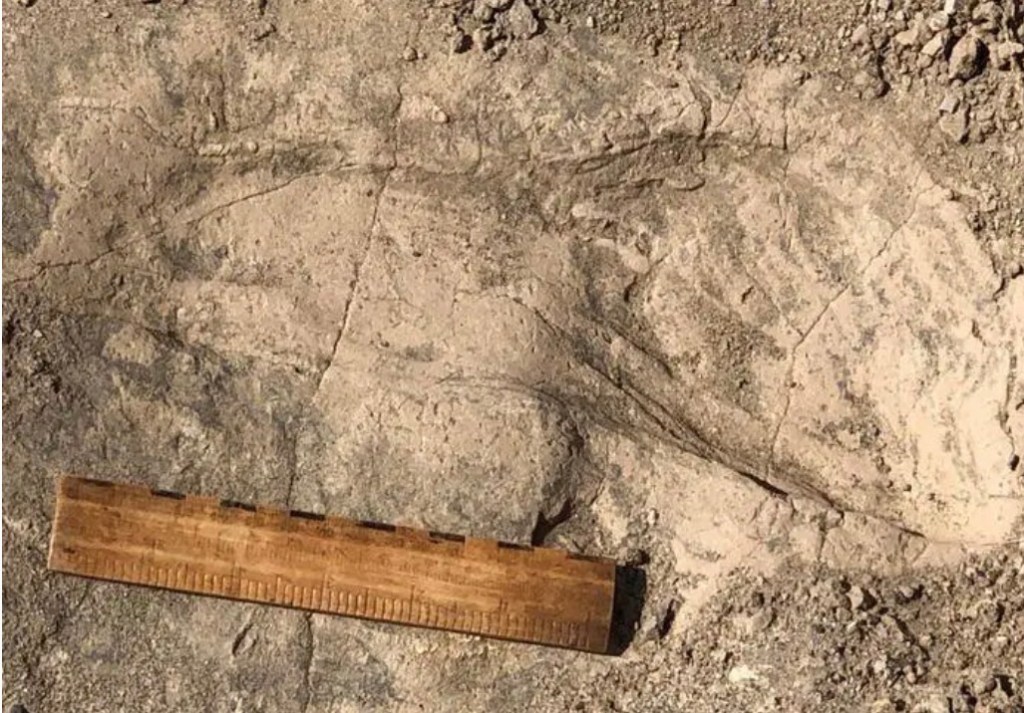
One of the large, 1.4-million-year-old footprints that the team excavated. A 6-inch (~15 cm) ruler is shown for scale. Image Credit: Kay Behrensmeyer.
Scientists recently made a huge discovery about our past. A new analysis of a 1.4-million-year-old fossilized footprints in Kenya has completely rewritten what we know about our ancient human cousin.
Paranthropus boisei was previously assumed to be a quite small hominid as only skulls and jaw bones had been collected, but these tracks revealed they stand up to 5’11” and weighed approximately 165 lbs.
Beyond their size, the tracks offered scientists a rare window into their ancient behavior. A group of eight adult males were found traveling together, suggesting a complex social structure where competing males cooperated for the sake of group safety. Since most fossils from this species were just skulls, these footprints provided an incredible snapshot of how they actually lived and moved…
You can read the full study published in the journal PNAS here.
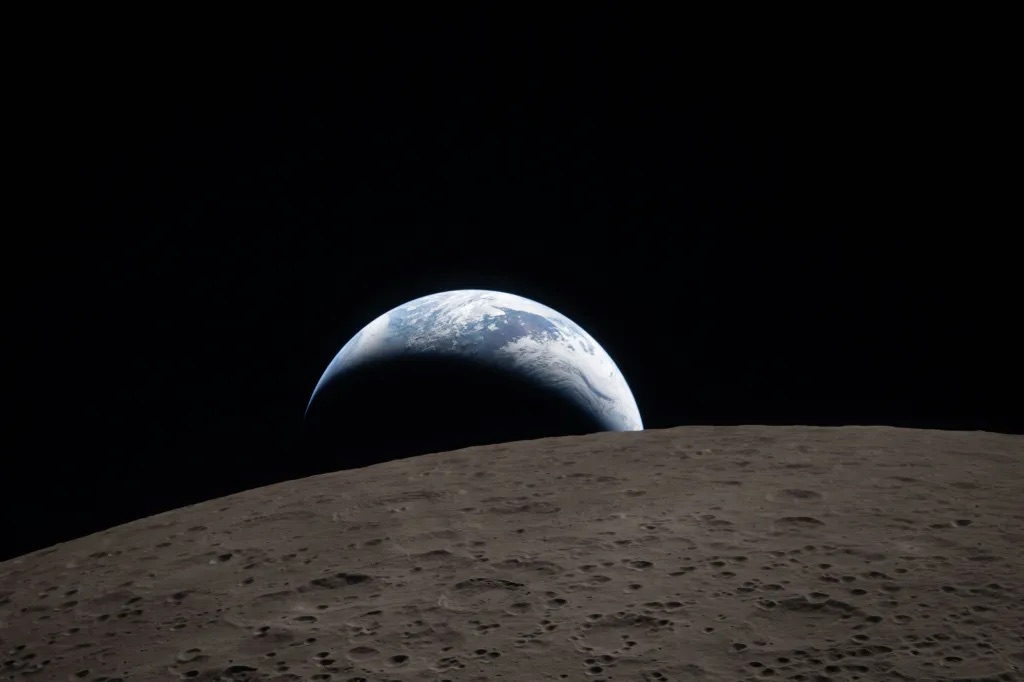
For some of us space enthusiasts, this launch of the Artemis II was a historic milestone, the first time humans have returned to the moon’s vicinity in over 50 years. I know I was excited to watch the launch, and also praying everything would go off without a hitch.
However, for some of the internet, a series of technical glitches in the live broadcast had become “proof” of yet another hoax.
The conspiracy began following a live interview with the crew. Viewers noticed strange distortions flickering across the “zero-gravity indicator”, an adorable plush toy created by Lucas Ye, A San Francisco Bay Area second-grader who won a competition for his “moon mascot ”. On social media, the distortions were labeled as a “green screen failures” but In reality, the “glitch” was just a byproduct of modern day broadcasting. To make live feeds more informative, networks use chromakey overlays to digitally layer text and graphics over the footage. When the signal fluctuated, these digital layers momentarily flickered, creating the illusion that the background was being “faked”. Filmed in a Hollywood studio like some believe the 1969 Apollo II mission to the moon was only this trip had the “waving flag” dilemma.
For me? I didn’t notice that at the time, but I just assume “glitches” and pauses in audio are expected given that they are the distance away that they are. Our technology has issues just home in our home let alone in space.
But it is humorous that here we are with a moon expedition again, and once again the conspiracy theorists are ready for it.
In the current climate of this country I personally welcomed the distraction, something most of us could come together for. And it also had a Canadian Astronaut with a Sasquatch on his patch, making it a first for a cryptid in space!
Congratulations to the astronauts of the Artemis II for this historic trip to the dark side of the moon.
“The dinosaur tracks, believed to date back to the Cretaceous Period around 66 million years ago, sit only inches away from the intricate carvings. Some petroglyphs were discovered just two to four inches from the fossilized prints, indicating a deliberate placement.
“The individuals who crafted the petroglyphs were acutely aware of the footprints, likely selecting the location precisely because of them,” explained Leonardo Troiano, an archaeologist from Brazil’s National Institute of Historic and Artistic Heritage. According to the research team, this suggests a conscious effort by ancient peoples to engage with these ancient remnants.”
To be a fly on the wall to see how early man reacted or what their understanding of dinosaurs were. I’m positive about one thing, they didn’t think they weren’t real!
Some days when you turn on the news, it’s all just too much, so it was nice to stumble on an old YouTube video of something wonderful. Someone doing good things in the world. Something not negative.
Meet Norman Smith, the owl man of Logan airport. Specifically, the snowy owl man. Owls have been an ongoing problem for airports along the east coast especially Logan airport’s due to it’s flat tundra like environment and by being surrounded on three sides by water, reminding them of their home in the arctic. They come on by for a visit every year.
But now, thanks to this man, the way the airports deal with them has changed for the better. In the past, the problem was solved by the airport having people go out and shooting and killing these beautiful creatures. But times have changed, and I’m so relieved it has.
Photo by Mark Kent, Creative Commons
Norman Smith, now 73, is a raptor specialist who has worked for the Audubon for decades and who also started the The Snowy Owl Project. Smith created the protocols to safely remove the owls as well as a special net trapping system to help catch and protect these owls at the airport. He bands them for study and releases them. He has now dedicated 43 years to these owls and has saved at least 900 owls to date. Amazing.
Other airports were slower to catch on to these protocols. In 2014 New York’s JFK shot 50 to 60 of these creatures and when the press caught wind, they too adopted these protocols.
In 2023 and 24’ these owls numbers were decimated by the bird flu and climate change, every safe owl from Logan may mean this species will survive.
Snowy owls don’t have exact fixed migration routes they travel from the Arctic to the North East based on food sources, which we seem to have in abundance for them to return here.
Everyone should find out how their airports are handling wildlife. Have an active voice in their safety.
Norman Smith is a hero to me and if you’d like to learn more about his work you can check out this short documentary by Anna Miller.
Humanities greed and destruction has made many creatures extinct, or at serious risk for extinction. While research companies such as Colossal are trying to bring back those that are extinct, some conservation experts are simply trying to save what exists today. Which brings us to the strange, but beautiful looking creature.
This amazing animal once walked with the ice age giants like the wooly mammoths. Their image is painted on cave walls by early man. But sadly, like the mammoths, they too were hunted to near extinction for their hides and horns.
These creatures somehow survived us, and it’s worth telling their story.
The Saiga antelope’s story stretches back over 100,000 years,
when it roamed alongside mammoths, woolly rhinos, and cave lions. Fossil evidence suggests that it was once widespread across Europe and Asia, even reaching Britain and Alaska during glacial periods. Its uniquely structured snout helps filter out dust and regulate air temperature, something that helped it survive in frigid landscapes.
Despite surviving the Pleistocene mass extinctions, the Saiga began to retreat eastward due to climatic shifts and human expansion. Today, it remains in isolated pockets across Kazakhstan, Mongolia, Russia, and Uzbekistan.
Showing its long history beside man, it appears in our Mythology and Folklore record. It has had cultural and spiritual significance across Eurasia, where nomadic peoples revered it as a “messenger between worlds”.
In Turkic and Mongol tribes, the Saiga was considered a “divine messenger of Tengri”, (the sky god). Its horns were believed to carry mystical energy, and were used in rituals and offerings to bring prosperity and good fortune to their people.
In Siberian folklore it was said to be capable of summoning rain during times of drought. Some legends even spoke of Saiga antelope “communicating with spirits”, guiding shamans through the invisible realms.
In Kazakh folklore the Saiga represents rebirth and endurance. Some ancient stories tell of wounded warriors seeing visions of Saiga leading them back home.
Art by Сауле Баймышева
The Saiga antelope appeared in prehistoric cave art, suggesting it was a part of early human life. In the Cosquer Cave a near France, it was depicted alongside bison, deer, and horses. This artwork confirms it’s part in the Ice Age ecosystem, and its connection with early hunters.
To save this beautiful creature from going out like the mammoth, it is in protected status. They are cracking down on poachers in the area, the horns are wanted for Chinese medicine, creating an underground trade for the animal. In 2015 a devastating disease wiped out 200,000 of them. It’s at risk from both climate change and habitat destruction. So far, global conservation efforts have gotten the population up to over a million. And currently migration corridors have been safeguarded to ensure the species can roam freely…
As relieved as I am to see that this species is rebounding and protected, all animals are in constant dire threat from us. It’s something that keeps me up at night. We need to change, we need to stop tearing down woodlands and just live within what we have already constructed, if we don’t it’s the beginning of the end for all of us…
According to the Daily Mail a team of American archaeologists believe they have uncovered the remains of Noah’s Ark.
Researchers working at a site in Turkey known as the Durupınar Formation uncovered a “tunnel” located under a boat-shaped formation, which matches the Biblical description of Noah’s Ark.
The site is only 18 miles from Mount Ararat, which has long been rumored to have been the final destination of the ship. “We’re not expecting something that’s fully preserved,” lead researcher Andrew Jones said. “What’s left is the chemical imprint, pieces of wood, and in the ground, the shape of a hall.”
“Relying on deft genetic engineering and ancient, preserved DNA, Colossal scientists deciphered the dire wolf genome, rewrote the genetic code of the common gray wolf to match it, and, using domestic dogs as surrogate mothers, brought Romulus, Remus, and their sister, 2-month-old Khaleesi, into the world during three separate births last fall and this winter—effectively for the first time de-extincting a line of beasts whose live gene pool long ago vanished. TIME met the males (Khaleesi was not present due to her young age) at a fenced field in a U.S. wildlife facility on March 24, on the condition that their location remain a secret to protect the animals from prying eyes.”
“An underwater camera set up 55 years ago to try and photograph the Loch Ness Monster has been found by accident by a robot submarine.
The ocean-going yellow sub – called Boaty McBoatface – was being put through trials when its propeller snagged the mooring for the 1970s camera system.
It is believed it was lowered 180m (591ft) below the loch’s surface by the Loch Ness Investigation Bureau, a group set up in the 1960s to uncover the existence of Nessie in the waters.
No footage of Nessie has been found on the camera, but one of the submarine’s engineers was able to develop a few images of the loch’s murky waters. “