The Shunka Warak’in: A Cryptid Bridging Native Lore and Pioneer Tales…

And now for something completely different… this weird creature called the Shunka Warak’in. Often dubbed the “Rocky Mountain Hyena” or simply “the Beast,” this wolf-like creature has slinked through Native American folklore and settler tales,and maybe even the Ice Age.

Roots in Native American Lore: The Dog-Snatcher of the Plains

Long before European settlers arrived, the Shunka Warak’in was a figure in Native American traditions, particularly among the Ioway (Iowa) tribe and neighboring groups like the Lakota and Shoshone in the Great Plains and Midwest regions. The name itself, “Shunka Warak’in,” translates roughly to “carries off dogs” in the Ioway language, fitting for a beast notorious for sneaking into villages under the cover of night to snatch canines right from under their owners’ noses.

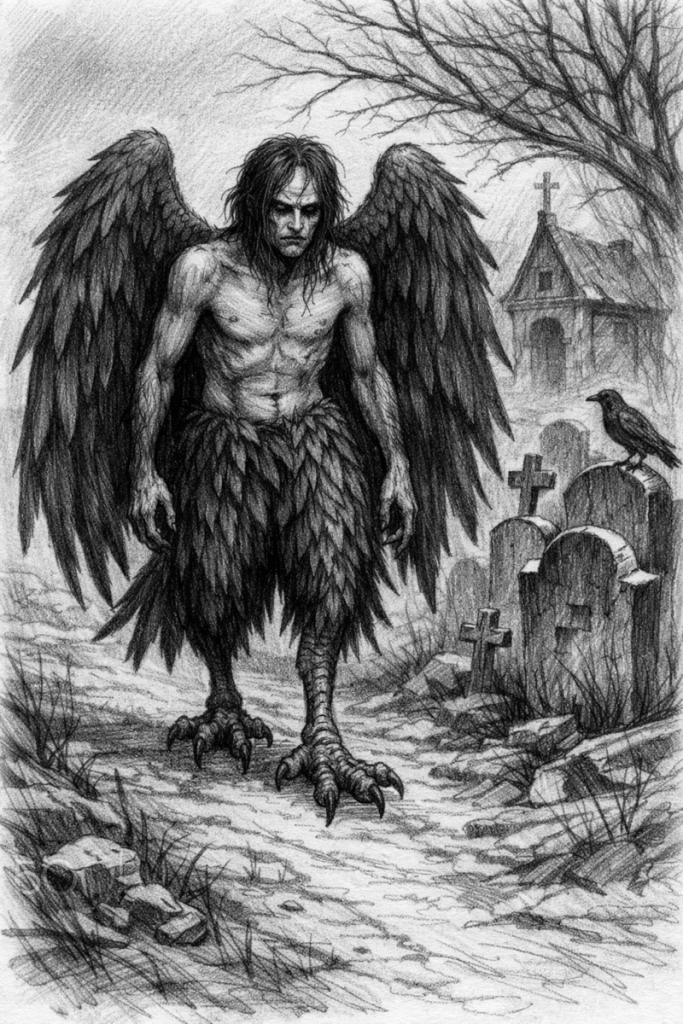
Descriptions from oral histories paint it as larger than a wolf, with dark, shaggy fur, high shoulders, and a sloping back that gives it a hyena-like silhouette. It wasn’t just a scavenger; this cryptid was bold, aggressive, and eerily unintimidated by humans or campfires. Tribes like the Ioway distinguished it clearly from ordinary wolves, they knew their local wildlife intimately, and this was something else to them.

One tale, shared by Ioway historic preservationist Lance Foster, recounts a fierce battle where warriors slew a Shunka Warak’in. Victorious, they fashioned pieces of its hide into sacred war bundles or medicine pouches, believing the creature’s resilience would make them “as hard to kill” as the beast itself. In these cultures, the Shunka Warak’in wasn’t merely a monster; it symbolized the perils of the untamed frontier.

Pioneer Encounters: Excerpts from a Naturalist’s Memoir

Fast-forward to the late 1800s, when white settlers in Montana’s Madison River Valley began reporting encounters that eerily mirrored the Native tales. The most famous account comes from rancher Israel Ammon Hutchins, whose story was immortalized by his grandson, zoologist Ross E. Hutchins, in the 1977 book Trails to Nature’s Mysteries: The Life of a Working Naturalist (with a 1997 reprint).

Hutchins recounts his grandfather’s chilling brushes with the creature in vivid detail. One excerpt describes an early sighting:

“One winter morning my grandfather was aroused by the barking of dogs. He discovered that a wolf-like beast of dark color was chasing my grandmother’s geese. He fired at it but missed and ran off towards the river.”

The beast returned repeatedly, prompting more confrontations. Eventually, Israel succeeded: “Then one morning in late January, my grandfather was alerted by the dogs, and this time he was able to kill it.” Witnesses described it as “nearly black and having high shoulders and a back that sloped downward like a hyena.”

The carcass was traded to taxidermist Joseph Sherwood, who mounted it and displayed it as the “ringdocus” or “guyasticutus”, quirky names for what became a local curiosity. It vanished for decades, known only from a grainy photo in Hutchins’ book, until its rediscovery in 2007 at the Idaho Museum of Natural History (now on display at the Madison Valley History Association Museum in Ennis, Montana).

Ross Hutchins, with his scientific background, couldn’t classify it definitively, speculating it might be an escaped hyena but noting the improbability.

Echoes from the Ice Age: The Running Hyena Connection

What if the Shunka Warak’in isn’t just myth or legend, but a remnant of prehistoric North America? Cryptozoologists often compare it to Chasmaporthetes ossifragus, the “running hyena” or “American hyena”, an extinct species that roamed the continent during the Pliocene to Pleistocene epochs (about 4.9 million to 780,000 years ago).

Unlike the bone-crushing hyenas of today, Chasmaporthetes was built for speed with long legs for chasing prey across the grasslands, with a hyena-like build but more wolfish agility. Originating in the Old World (possibly Africa, Europe, or Asia), it crossed the Bering Land Bridge into North America around 5-3 million years ago, spreading south to areas like Arizona, Texas, Florida, and Mexico. Fossils are rare and fragmentary, but recent finds extend its range northward, even into Beringia and above the Arctic Circle.

This was a top predator on the Pleistocene plains, hunting pronghorns and other fast game. Its sloping back and powerful shoulders match Shunka descriptions, fueling theories of a relict population surviving into modern times perhaps even explaining those pioneer sightings.

Wrapping Up the Mystery: Fact, Fiction, or Fossil Survivor?

The Shunka Warak’in has sightings reported from Ioway warriors, Montana ranches and possibly Ice Age fossils. Is it a misidentified wolf? An escaped exotic pet? Or maybe did this creature survive, evolve and adapt from its ice age ancestors?

Have you heard of or had an encounter with this cryptid of legend, let me know…

Have a great Thursday!

Bigfoot on Social Media…Bigfoot video from Pennsylvania

This video was posted on the Reddit platform with the following caption..

“I have a friend who lives up in Pennsylvania, and he insists that he saw a “bigfoot”. He sent me this video in a group chat, and I’m not sure what to think of it. I don’t know if he actually did see a Bigfoot or if he’s pranking me, or what. He’s very insistent and doesn’t sound like he’s lying so I’m leaning towards believing him. I just wanna consult people who actually know something about Bigfoot and whether this looks legit or not?”

I’ve watched this video a few times now, and yes the person/bigfoot moves fast, the person filming the video has erratic breathing as if truly scared and confused with what they’re looking it. And maybe they are. It’s not hard to psyche yourself out, out there even if you’re actually out there looking for a bigfoot.

But the movement is very quick, and not typically the movement most witnesses have described. The overall consensus of the people commenting was that it was a cross country skier, possibly a trail runner. Or just a fast walker.

If the person filming heads back to look for tracks and/or recreates the moment on video and gives more information, the distance away, etc. it may add more credibility. For now me personally I’m going with human.

Let me know what you think, and if you want to follow along with the post here is the link.

Have a great Tuesday!

https://www.reddit.com/r/bigfoot/s/R5gIVGqcnm

Down off Main Street…The Oliver Dean House

Down off Main Street…
So I was out visiting my hometown tonight and I thought I’d tell you another haunting tale from it. Now most of you know I was raised and lived in a haunted house, and that the homes around me also reported some strange happenings to me, but you didn’t know this…I’m here at the Oliver Dean House, who founded Dean Junior College. (You can see St Mary’s Church down the road a bit in the video, that’s where I lived).
This home was built in 1752, and when Mr. Dean went to retire in that home he installed floor to ceiling mirrors because he wanted to create a porthole to the other side to his deceased wife so he could talk to her. In his will, he asked that the mirrors be kept up and for a trunk with some of each of their clothing.
Did Oliver Dean actually create a porthole? I’m really starting to wonder…
If you haven’t heard my paranormal past you can read the Down on Main Street posts on the blog In my bio…

Winter Solstice

“On the first day of winter the solstice night descends

Stars and moonlight shine, and the long darkness begins

The world falls in a silent slumber beneath a frosted veil

And if you listen close, you can hear the whispers of the ancients on every icy trail

The trees stand tall and barren with their branches frosted in white 

They are the guardians of this long quiet night

Snowflakes dance like spirits in the moon’s silver glow

A winter ballet is performed where the shadows show 

The solstice marks a turning, a promise in the cold 

That light will soon be longer as the days begin to unfold

So don’t worry about the cold find the beauty in the solstice’s embrace 

There in her quiet the moon will find her grace

For even in the very depth of winter, there is still magic out there 

So look and listen with your heart and you will begin to see it everywhere…”

Poem by me…

Lake St. Clair Serpent…

“While Miss Ella Burdick and
some friends were out fishing on Lake St. Clair, one evening last week at sundown, a dark peculiar looking object was seen coming up the lake. They rowed very close to the object and were able to get a good look at it. It appeared to have a head somewhat like a dog, with huge eyes protruding and tusk-like projections on each side of the head. Its body appeared to lie some seven or eight feet under water. Some fishermen also saw it and claimed it was some sort of sea serpent. It was certainly a very dangerous and horrible-looking object and was swimming at a very rapid rate.”
Excerpt from cryptozoo-oscity about the 1800s sighting of the Lake St. Clair sea serpent…

http://cryptozoo-oscity.blogspot.com/2025/09/lake-st-clair-serpent.html?m=1

Dinosaur Tracks and Petroglyphs…

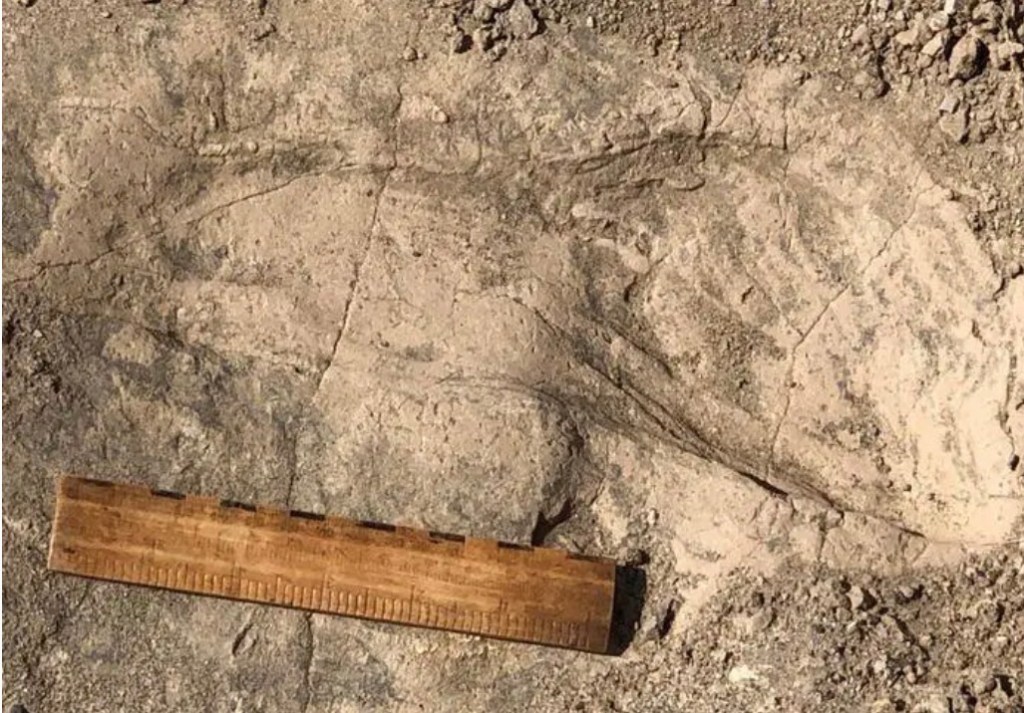
“The dinosaur tracks, believed to date back to the Cretaceous Period around 66 million years ago, sit only inches away from the intricate carvings. Some petroglyphs were discovered just two to four inches from the fossilized prints, indicating a deliberate placement. 

“The individuals who crafted the petroglyphs were acutely aware of the footprints, likely selecting the location precisely because of them,” explained Leonardo Troiano, an archaeologist from Brazil’s National Institute of Historic and Artistic Heritage. According to the research team, this suggests a conscious effort by ancient peoples to engage with these ancient remnants.”

To be a fly on the wall to see how early man reacted or what their understanding of dinosaurs were. I’m positive about one thing, they didn’t think they weren’t real!

You can read more of the article below…

https://dailygalaxy.com/2025/07/rock-art-found-next-to-dinosaur-tracks/#google_vignette

Wildlife Wednesday…Meet Henry The Oldest Crocodile

Henry at Crocworld

This is Henry, a crocodile that was captured back in 1903 by elephant catcher called Sir Henry. They are guessing he was born around 1900, but since he was in the wild that aren’t exactly sure. They celebrate his birthday on December 16th making him 125 years old this year. Go Henry!

Henry measures over 16 feet 5 inches from snout to tail and weighs 1,543 pounds. Henry has fathered thousands of offspring and currently resides at Crocworld Conservation where he’s lived since 1985. He resides with another senior crocodile, Colgate, and six wives! Henry is likely a very happy croc. They are planning a big celebration for Henry’s birthday this year and rightly so. I’d love to be there, but since most of his likely will not be able to attend you can check back in to their website and see some pics and videos of the day.

Here’s a little video of Henry, it’s amazing to see his size!

Have a great Wednesday everyone.

Meet Henry

Sources for article from IFL Science and Crocworld….

The Owl Man of Logan Airport…

Some days when you turn on the news, it’s all just too much, so it was nice to stumble on an old YouTube video of something wonderful. Someone doing good things in the world. Something not negative.

Meet Norman Smith, the owl man of Logan airport. Specifically, the snowy owl man. Owls have been an ongoing problem for airports along the east coast especially Logan airport’s due to it’s flat tundra like environment and by being surrounded on three sides by water, reminding them of their home in the arctic. They come on by for a visit every year.

But now, thanks to this man, the way the airports deal with them has changed for the better. In the past, the problem was solved by the airport having people go out and shooting and killing these beautiful creatures. But times have changed, and I’m so relieved it has.

Photo by Mark Kent, Creative Commons

Norman Smith, now 73, is a raptor specialist who has worked for the Audubon for decades and who also started the The Snowy Owl Project. Smith created the protocols to safely remove the owls as well as a special net trapping system to help catch and protect these owls at the airport. He bands them for study and releases them. He has now dedicated 43 years to these owls and has saved at least 900 owls to date. Amazing.

Other airports were slower to catch on to these protocols. In 2014 New York’s JFK shot 50 to 60 of these creatures and when the press caught wind, they too adopted these protocols.

In 2023 and 24’ these owls numbers were decimated by the bird flu and climate change, every safe owl from Logan may mean this species will survive.

Snowy owls don’t have exact fixed migration routes they travel from the Arctic to the North East based on food sources, which we seem to have in abundance for them to return here.

Everyone should find out how their airports are handling wildlife. Have an active voice in their safety.

Norman Smith is a hero to me and if you’d like to learn more about his work you can check out this short documentary by Anna Miller.

Have a great Tuesday everyone…

Snowy Owls of Logan Airport

The Saige Antelope, History and Conservation Effort…

Humanities greed and destruction has made many creatures extinct, or at serious risk for extinction. While research companies such as Colossal are trying to bring back those that are extinct, some conservation experts are simply trying to save what exists today. Which brings us to the strange, but beautiful looking creature.

This amazing animal once walked with the ice age giants like the wooly mammoths. Their image is painted on cave walls by early man. But sadly, like the mammoths, they too were hunted to near extinction for their hides and horns.

These creatures somehow survived us, and it’s worth telling their story.

The Saiga antelope’s story stretches back over 100,000 years,

when it roamed alongside mammoths, woolly rhinos, and cave lions. Fossil evidence suggests that it was once widespread across Europe and Asia, even reaching Britain and Alaska during glacial periods. Its uniquely structured snout helps filter out dust and regulate air temperature, something that helped it survive in frigid landscapes.

Despite surviving the Pleistocene mass extinctions, the Saiga began to retreat eastward due to climatic shifts and human expansion. Today, it remains in isolated pockets across Kazakhstan, Mongolia, Russia, and Uzbekistan.

Showing its long history beside man, it appears in our Mythology and Folklore record. It has had cultural and spiritual significance across Eurasia, where nomadic peoples revered it as a “messenger between worlds”.

In Turkic and Mongol tribes, the Saiga was considered a “divine messenger of Tengri”, (the sky god). Its horns were believed to carry mystical energy, and were used in rituals and offerings to bring prosperity and good fortune to their people.

In Siberian folklore it was said to be capable of summoning rain during times of drought. Some legends even spoke of Saiga antelope “communicating with spirits”, guiding shamans through the invisible realms.

In Kazakh folklore the Saiga represents rebirth and endurance. Some ancient stories tell of wounded warriors seeing visions of Saiga leading them back home.

Art by Сауле Баймышева

The Saiga antelope appeared in prehistoric cave art, suggesting it was a part of early human life. In the Cosquer Cave a near France, it was depicted alongside bison, deer, and horses. This artwork confirms it’s part in the Ice Age ecosystem, and its connection with early hunters.

To save this beautiful creature from going out like the mammoth, it is in protected status. They are cracking down on poachers in the area, the horns are wanted for Chinese medicine, creating an underground trade for the animal. In 2015 a devastating disease wiped out 200,000 of them. It’s at risk from both climate change and habitat destruction. So far, global conservation efforts have gotten the population up to over a million. And currently migration corridors have been safeguarded to ensure the species can roam freely…

As relieved as I am to see that this species is rebounding and protected, all animals are in constant dire threat from us. It’s something that keeps me up at night. We need to change, we need to stop tearing down woodlands and just live within what we have already constructed, if we don’t it’s the beginning of the end for all of us…

Sources:

https://en.wikipedia.org/wiki/Saiga_antelope

https://saiga-conservation.org/2023/12/11/saiga-antelope-a-conservation-triumph-and-ongoing-challenges/

https://newsroom.wcs.org/News-Releases/articleType/ArticleView/articleId/21627/Unprecedented-Conservation-Triumph-Saiga-Antelope-Reclassified-From-Critically-Endangered-to-Near-Threatened-in-the-IUCN-Red-List-of-Threatened-Species.aspx

Did They Find Noah’s Ark?

Make thee an ark of gopher wood…

According to the Daily Mail a team of American archaeologists believe they have uncovered the remains of Noah’s Ark.

Researchers working at a site in Turkey known as the Durupınar Formation uncovered a “tunnel” located under a boat-shaped formation, which matches the Biblical description of Noah’s Ark.

The site is only 18 miles from Mount Ararat, which has long been rumored to have been the final destination of the ship. “We’re not expecting something that’s fully preserved,” lead researcher Andrew Jones said. “What’s left is the chemical imprint, pieces of wood, and in the ground, the shape of a hall.”

Read the article here:

https://www.dailymail.co.uk/sciencetech/article-14704603/Bombshell-discovery-site-Noahs-Ark-researchers-say-prove-Biblical-story-true.html