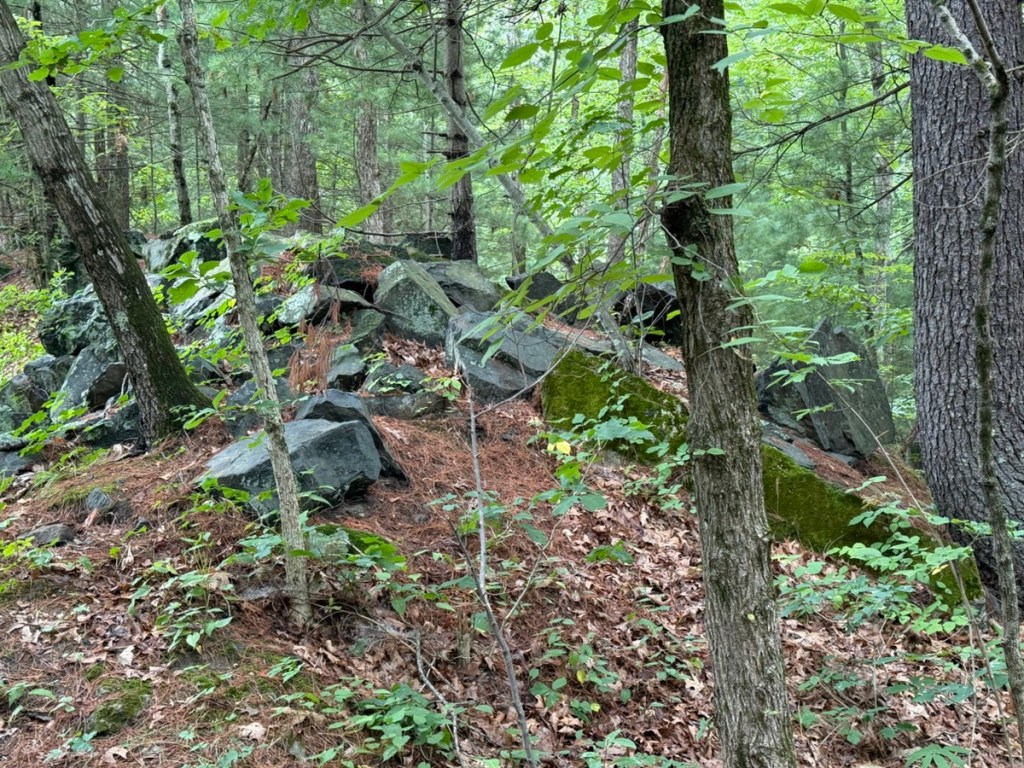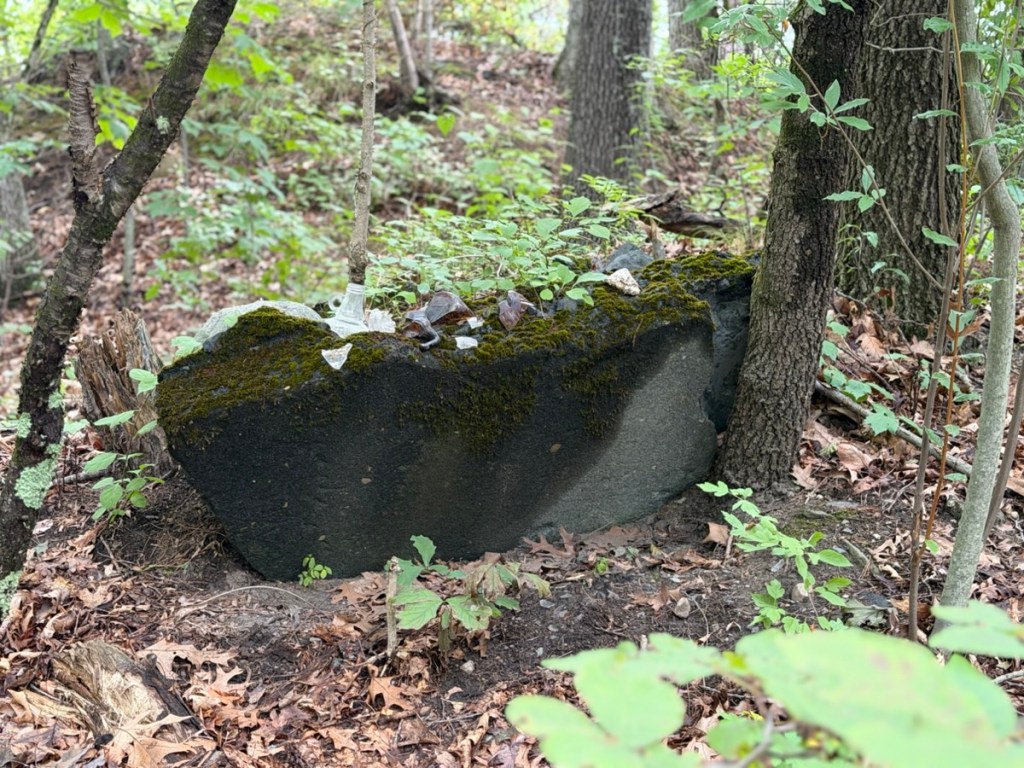
I was out for a stroll in Cumberland RI to grab some Cumberlandite for the sister and friend. Cumberlandite is a rare igneous rock made up of a high concentration of iron and titanium, making it magnetic.
Named the official state rock back in 1966, its primary home is a small 4-acre deposit at Iron Mine Hill.
The color is a dark brown to solid black with white or greenich speckles.
Because of its color and it being slightly magnetic some believed it was actually from a meteorite.
The local indigenous tribes, revered the stones as sacred and used it to fashion tools.
Back during the Revolutionary War the settlers attempted to cast cannonballs from it but the metal composition proved too weak and the cannons infamously cracked or exploded. Often called the cannonball debacle!
At one time it was used to create the Iron Mine Railroad, which operated for less than ten years to transport the mined Cumberlandite.
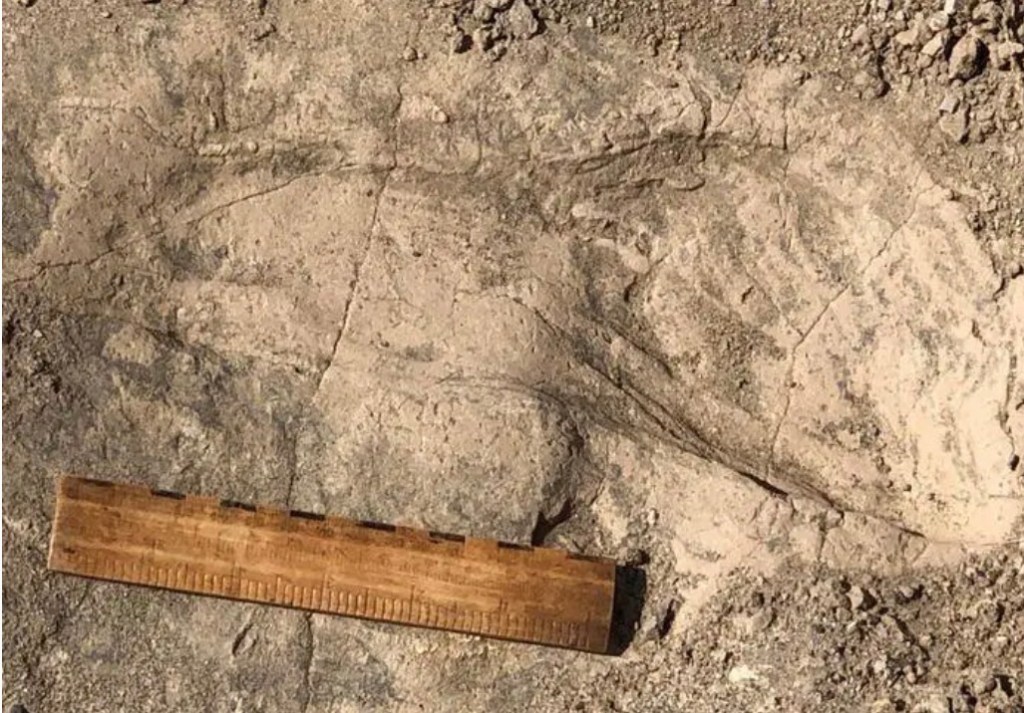
Approximately 1.43-million-year-old hominin footprint from Koobi Fora, Kenya. Image Credit: Kevin G. Hatala.
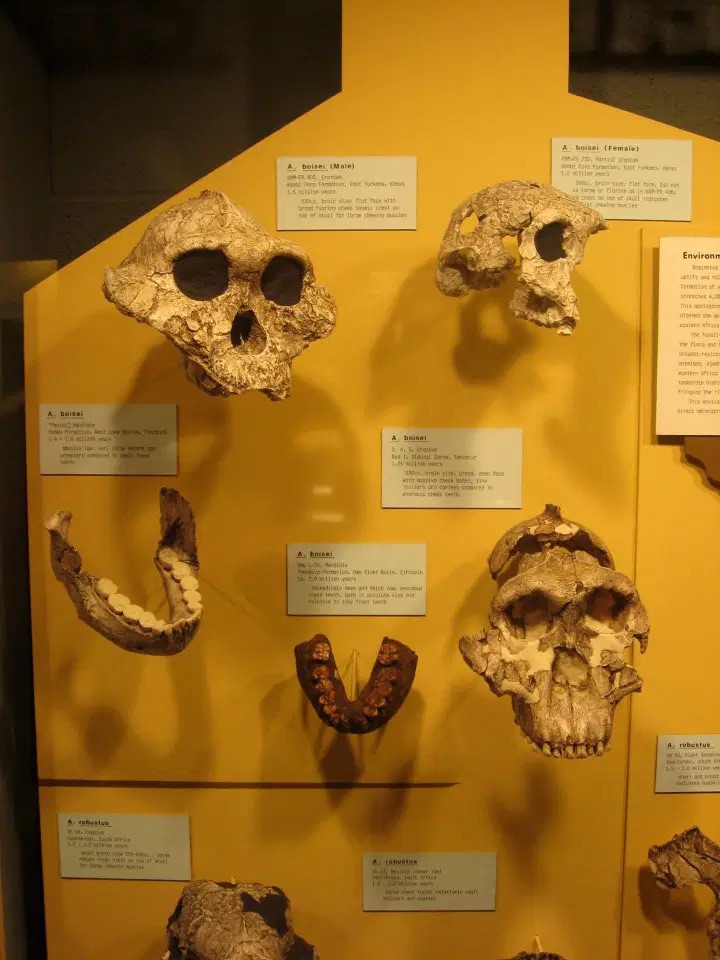
Paranthropus Boisei went for a walk over a million years ago left more than just a footprintโฆ
One of the large, 1.4-million-year-old footprints that the team excavated. A 6-inch (~15 cm) ruler is shown for scale. Image Credit: Kay Behrensmeyer.
Scientists recently made a huge discovery about our past. A new analysis of a 1.4-million-year-old fossilized footprints in Kenya has completely rewritten what we know about our ancient human cousin.
Paranthropus boisei was previously assumed to be a quite small hominid as only skulls and jaw bones had been collected, but these tracks revealed they stand up to 5โ11โ and weighed approximately 165 lbs.
Beyond their size, the tracks offered scientists a rare window into their ancient behavior. A group of eight adult males were found traveling together, suggesting a complex social structure where competing males cooperated for the sake of group safety. Since most fossils from this species were just skulls, these footprints provided an incredible snapshot of how they actually lived and movedโฆ
You can read the full study published in the journal PNAS here.
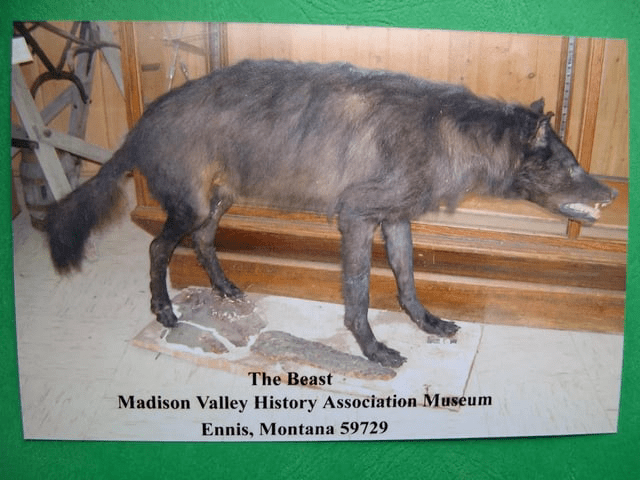
And now for something completely differentโฆ this weird creature called the Shunka Warakโin. Often dubbed the โRocky Mountain Hyenaโ or simply โthe Beast,โ this wolf-like creature has slinked through Native American folklore and settler tales,and maybe even the Ice Age.
Roots in Native American Lore: The Dog-Snatcher of the Plains
Long before European settlers arrived, the Shunka Warakโin was a figure in Native American traditions, particularly among the Ioway (Iowa) tribe and neighboring groups like the Lakota and Shoshone in the Great Plains and Midwest regions. The name itself, โShunka Warakโin,โ translates roughly to โcarries off dogsโ in the Ioway language, fitting for a beast notorious for sneaking into villages under the cover of night to snatch canines right from under their ownersโ noses.
Descriptions from oral histories paint it as larger than a wolf, with dark, shaggy fur, high shoulders, and a sloping back that gives it a hyena-like silhouette. It wasnโt just a scavenger; this cryptid was bold, aggressive, and eerily unintimidated by humans or campfires. Tribes like the Ioway distinguished it clearly from ordinary wolves, they knew their local wildlife intimately, and this was something else to them.
One tale, shared by Ioway historic preservationist Lance Foster, recounts a fierce battle where warriors slew a Shunka Warakโin. Victorious, they fashioned pieces of its hide into sacred war bundles or medicine pouches, believing the creatureโs resilience would make them โas hard to killโ as the beast itself. In these cultures, the Shunka Warakโin wasnโt merely a monster; it symbolized the perils of the untamed frontier.
Pioneer Encounters: Excerpts from a Naturalistโs Memoir
Fast-forward to the late 1800s, when white settlers in Montanaโs Madison River Valley began reporting encounters that eerily mirrored the Native tales. The most famous account comes from rancher Israel Ammon Hutchins, whose story was immortalized by his grandson, zoologist Ross E. Hutchins, in the 1977 book Trails to Natureโs Mysteries: The Life of a Working Naturalist (with a 1997 reprint).
Hutchins recounts his grandfatherโs chilling brushes with the creature in vivid detail. One excerpt describes an early sighting:
โOne winter morning my grandfather was aroused by the barking of dogs. He discovered that a wolf-like beast of dark color was chasing my grandmotherโs geese. He fired at it but missed and ran off towards the river.โ
The beast returned repeatedly, prompting more confrontations. Eventually, Israel succeeded: โThen one morning in late January, my grandfather was alerted by the dogs, and this time he was able to kill it.โ Witnesses described it as โnearly black and having high shoulders and a back that sloped downward like a hyena.โ
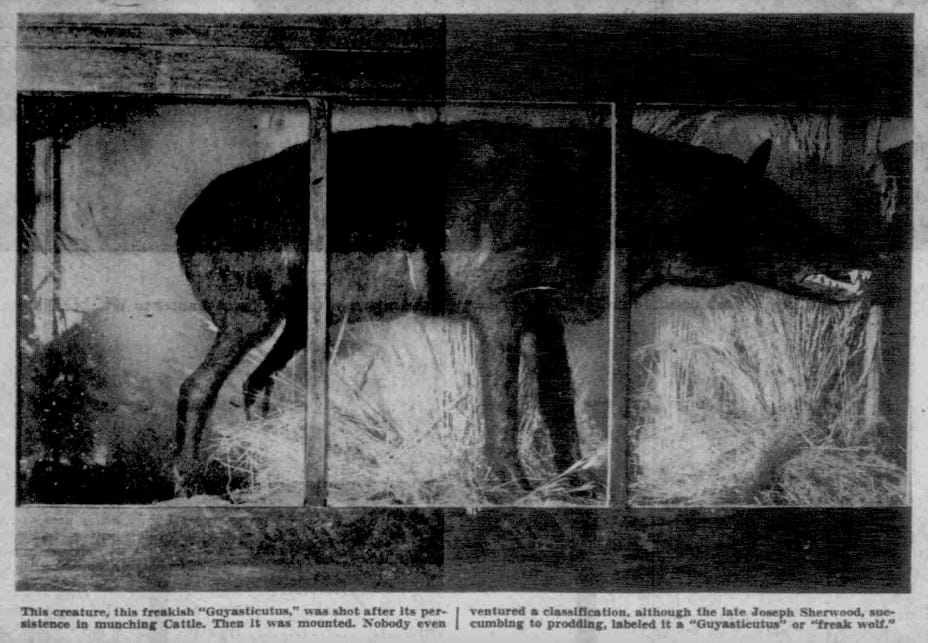
The carcass was traded to taxidermist Joseph Sherwood, who mounted it and displayed it as the โringdocusโ or โguyasticutusโ, quirky names for what became a local curiosity. It vanished for decades, known only from a grainy photo in Hutchinsโ book, until its rediscovery in 2007 at the Idaho Museum of Natural History (now on display at the Madison Valley History Association Museum in Ennis, Montana).
Ross Hutchins, with his scientific background, couldnโt classify it definitively, speculating it might be an escaped hyena but noting the improbability.
Echoes from the Ice Age: The Running Hyena Connection
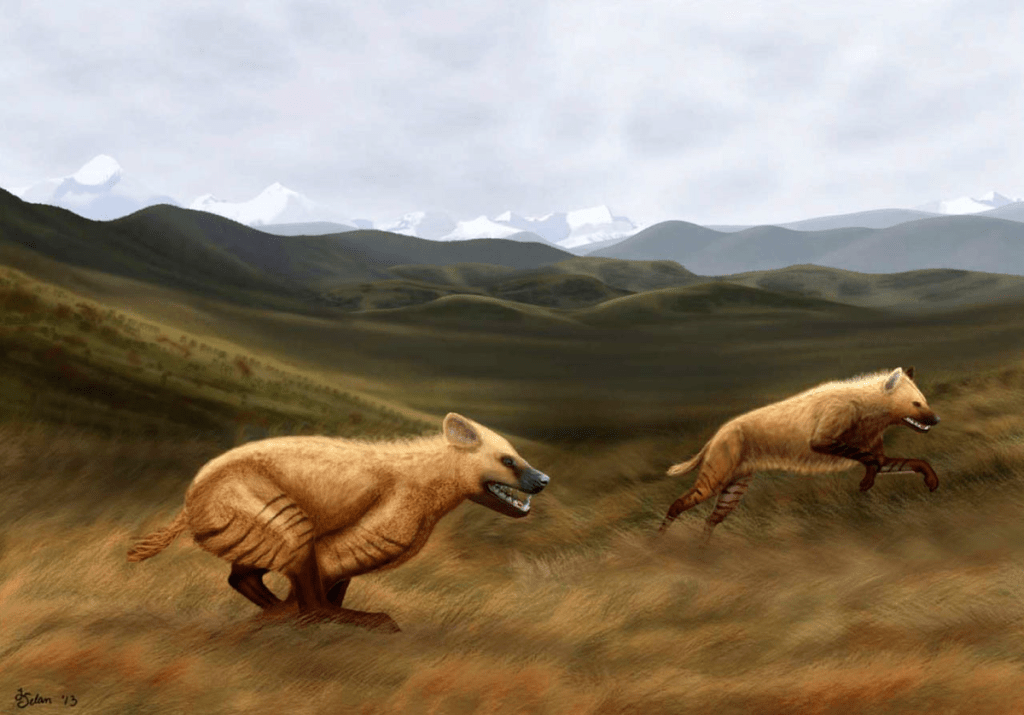
What if the Shunka Warakโin isnโt just myth or legend, but a remnant of prehistoric North America? Cryptozoologists often compare it to Chasmaporthetes ossifragus, the โrunning hyenaโ or โAmerican hyenaโ, an extinct species that roamed the continent during the Pliocene to Pleistocene epochs (about 4.9 million to 780,000 years ago).
Unlike the bone-crushing hyenas of today, Chasmaporthetes was built for speed with long legs for chasing prey across the grasslands, with a hyena-like build but more wolfish agility. Originating in the Old World (possibly Africa, Europe, or Asia), it crossed the Bering Land Bridge into North America around 5-3 million years ago, spreading south to areas like Arizona, Texas, Florida, and Mexico. Fossils are rare and fragmentary, but recent finds extend its range northward, even into Beringia and above the Arctic Circle.
This was a top predator on the Pleistocene plains, hunting pronghorns and other fast game. Its sloping back and powerful shoulders match Shunka descriptions, fueling theories of a relict population surviving into modern times perhaps even explaining those pioneer sightings.
Wrapping Up the Mystery: Fact, Fiction, or Fossil Survivor?
The Shunka Warakโin has sightings reported from Ioway warriors, Montana ranches and possibly Ice Age fossils. Is it a misidentified wolf? An escaped exotic pet? Or maybe did this creature survive, evolve and adapt from its ice age ancestors?
Have you heard of or had an encounter with this cryptid of legend, let me knowโฆ
โWhile Miss Ella Burdick and some friends were out fishing on Lake St. Clair, one evening last week at sundown, a dark peculiar looking object was seen coming up the lake. They rowed very close to the object and were able to get a good look at it. It appeared to have a head somewhat like a dog, with huge eyes protruding and tusk-like projections on each side of the head. Its body appeared to lie some seven or eight feet under water. Some fishermen also saw it and claimed it was some sort of sea serpent. It was certainly a very dangerous and horrible-looking object and was swimming at a very rapid rate.โ Excerpt from cryptozoo-oscity about the 1800s sighting of the Lake St. Clair sea serpentโฆ
โThe dinosaur tracks, believed to date back to the Cretaceous Period around 66 million years ago, sit only inches away from the intricate carvings. Some petroglyphs were discovered just two to four inches from the fossilized prints, indicating a deliberate placement.
โThe individuals who crafted the petroglyphs were acutely aware of the footprints, likely selecting the location precisely because of them,โ explained Leonardo Troiano, an archaeologist from Brazilโs National Institute of Historic and Artistic Heritage. According to the research team, this suggests a conscious effort by ancient peoples to engage with these ancient remnants.โ
To be a fly on the wall to see how early man reacted or what their understanding of dinosaurs were. Iโm positive about one thing, they didnโt think they werenโt real!
According to the Daily Mail a team of American archaeologists believe they have uncovered the remains of Noahโs Ark.
Researchers working at a site in Turkey known as the Durupฤฑnar Formation uncovered a โtunnelโ located under a boat-shaped formation, which matches the Biblical description of Noahโs Ark.
The site is only 18 miles from Mount Ararat, which has long been rumored to have been the final destination of the ship. โWe’re not expecting something that’s fully preserved,โ lead researcher Andrew Jones said. โWhat’s left is the chemical imprint, pieces of wood, and in the ground, the shape of a hall.โ
โAn underwater camera set up 55 years ago to try and photograph the Loch Ness Monster has been found by accident by a robot submarine.
The ocean-going yellow sub – called Boaty McBoatface – was being put through trials when its propeller snagged the mooring for the 1970s camera system.
It is believed it was lowered 180m (591ft) below the loch’s surface by the Loch Ness Investigation Bureau, a group set up in the 1960s to uncover the existence of Nessie in the waters.
No footage of Nessie has been found on the camera, but one of the submarine’s engineers was able to develop a few images of the loch’s murky waters. โ
โIt was 1972 in a sleepy little Cincinnati suburb when a police officer noticed what appeared to be a four-to-five-foot tall FROG standing on its hind legs near the Little Miami River.
He reported the sighting in Loveland, which quickly took off across the small town of 13,000, garnering surprise and mysticism as residents asked themselves if the story of a human-sized frog could possibly be real.
Days later, a second officer spotted the creature and shot it. After retrieving the carcass, he discovered it was an iguana and brought it to the second cop to see if that the creature he saw.โ
Paleontologists have unveiled a 30,000-year-old vulture fossil in Italy, preserved in volcanic ash, showcasing microscopic feather details through the formation of zeolite mineralsโฆ