The Owl Man of Logan Airport…

Some days when you turn on the news, it’s all just too much, so it was nice to stumble on an old YouTube video of something wonderful. Someone doing good things in the world. Something not negative.

Meet Norman Smith, the owl man of Logan airport. Specifically, the snowy owl man. Owls have been an ongoing problem for airports along the east coast especially Logan airport’s due to it’s flat tundra like environment and by being surrounded on three sides by water, reminding them of their home in the arctic. They come on by for a visit every year.

But now, thanks to this man, the way the airports deal with them has changed for the better. In the past, the problem was solved by the airport having people go out and shooting and killing these beautiful creatures. But times have changed, and I’m so relieved it has.

Photo by Mark Kent, Creative Commons

Norman Smith, now 73, is a raptor specialist who has worked for the Audubon for decades and who also started the The Snowy Owl Project. Smith created the protocols to safely remove the owls as well as a special net trapping system to help catch and protect these owls at the airport. He bands them for study and releases them. He has now dedicated 43 years to these owls and has saved at least 900 owls to date. Amazing.

Other airports were slower to catch on to these protocols. In 2014 New York’s JFK shot 50 to 60 of these creatures and when the press caught wind, they too adopted these protocols.

In 2023 and 24’ these owls numbers were decimated by the bird flu and climate change, every safe owl from Logan may mean this species will survive.

Snowy owls don’t have exact fixed migration routes they travel from the Arctic to the North East based on food sources, which we seem to have in abundance for them to return here.

Everyone should find out how their airports are handling wildlife. Have an active voice in their safety.

Norman Smith is a hero to me and if you’d like to learn more about his work you can check out this short documentary by Anna Miller.

Have a great Tuesday everyone…

Snowy Owls of Logan Airport

The Saige Antelope, History and Conservation Effort…

Humanities greed and destruction has made many creatures extinct, or at serious risk for extinction. While research companies such as Colossal are trying to bring back those that are extinct, some conservation experts are simply trying to save what exists today. Which brings us to the strange, but beautiful looking creature.

This amazing animal once walked with the ice age giants like the wooly mammoths. Their image is painted on cave walls by early man. But sadly, like the mammoths, they too were hunted to near extinction for their hides and horns.

These creatures somehow survived us, and it’s worth telling their story.

The Saiga antelope’s story stretches back over 100,000 years,

when it roamed alongside mammoths, woolly rhinos, and cave lions. Fossil evidence suggests that it was once widespread across Europe and Asia, even reaching Britain and Alaska during glacial periods. Its uniquely structured snout helps filter out dust and regulate air temperature, something that helped it survive in frigid landscapes.

Despite surviving the Pleistocene mass extinctions, the Saiga began to retreat eastward due to climatic shifts and human expansion. Today, it remains in isolated pockets across Kazakhstan, Mongolia, Russia, and Uzbekistan.

Showing its long history beside man, it appears in our Mythology and Folklore record. It has had cultural and spiritual significance across Eurasia, where nomadic peoples revered it as a “messenger between worlds”.

In Turkic and Mongol tribes, the Saiga was considered a “divine messenger of Tengri”, (the sky god). Its horns were believed to carry mystical energy, and were used in rituals and offerings to bring prosperity and good fortune to their people.

In Siberian folklore it was said to be capable of summoning rain during times of drought. Some legends even spoke of Saiga antelope “communicating with spirits”, guiding shamans through the invisible realms.

In Kazakh folklore the Saiga represents rebirth and endurance. Some ancient stories tell of wounded warriors seeing visions of Saiga leading them back home.

Art by Сауле Баймышева

The Saiga antelope appeared in prehistoric cave art, suggesting it was a part of early human life. In the Cosquer Cave a near France, it was depicted alongside bison, deer, and horses. This artwork confirms it’s part in the Ice Age ecosystem, and its connection with early hunters.

To save this beautiful creature from going out like the mammoth, it is in protected status. They are cracking down on poachers in the area, the horns are wanted for Chinese medicine, creating an underground trade for the animal. In 2015 a devastating disease wiped out 200,000 of them. It’s at risk from both climate change and habitat destruction. So far, global conservation efforts have gotten the population up to over a million. And currently migration corridors have been safeguarded to ensure the species can roam freely…

As relieved as I am to see that this species is rebounding and protected, all animals are in constant dire threat from us. It’s something that keeps me up at night. We need to change, we need to stop tearing down woodlands and just live within what we have already constructed, if we don’t it’s the beginning of the end for all of us…

Sources:

https://en.wikipedia.org/wiki/Saiga_antelope

https://saiga-conservation.org/2023/12/11/saiga-antelope-a-conservation-triumph-and-ongoing-challenges/

https://newsroom.wcs.org/News-Releases/articleType/ArticleView/articleId/21627/Unprecedented-Conservation-Triumph-Saiga-Antelope-Reclassified-From-Critically-Endangered-to-Near-Threatened-in-the-IUCN-Red-List-of-Threatened-Species.aspx

A Walk at Two Ponds Conservation…

Two Ponds boardwalk

On a beautiful Friday morning, (that they said would be rainy) I took an early morning walk through Two Ponds Conservation area in Falmouth Massachusetts. This was my first time at this trail but I was excited to check it out finally and check it off my “want to go box” on Google Maps.

Once a popular 9-hole, par 3 golf course, the land was donated to The 300 Committee Land Trust in 2014, since then it’s been protected land.

This 14.75-acre features Jones Pond and Sols Pond, and an Atlantic white cedar swamp. The swamp was the main attraction I was coming for, but I stayed a little longer for the bird songs. I even learned a little something. I learned that old sea captains brought the water from the cedar swamps on board because the acidity in the water made it safer to drink and that the early European settlers used the wood from the cedars because they resisted rot and insects.

The Upper Wetland Loop Trail has a beautiful boardwalk and viewing platform where I sat on a bench and just absorbed the view for a bit. While I was hanging I was visited by a beautiful bird that was not at all afraid of me being there, and just sat on a branch above my head singing away.

The red winged blackbird, a beautiful bird with a little yellow on his wing was singing away.

Warm sunlight, beautiful view and great music was very relaxing. I highly recommend this trail if you’re in the area.

You can do the shorter loop or the extended one that includes a connecting forest network and spend the day like I did. Either way taking that second for yourself in nature will be with it!

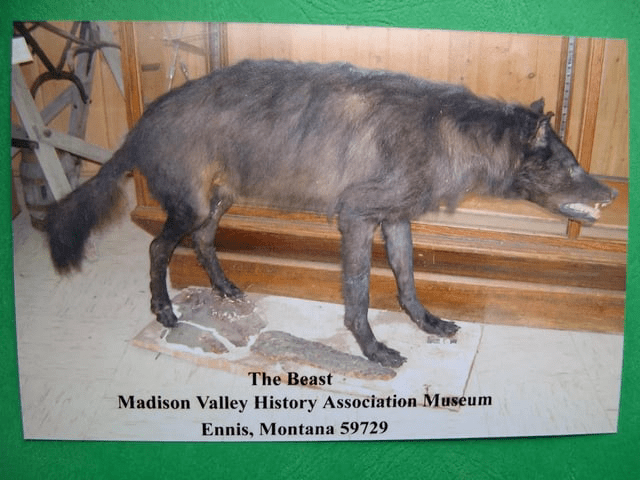
Return of the Dire Wolf…

“Relying on deft genetic engineering and ancient, preserved DNA, Colossal scientists deciphered the dire wolf genome, rewrote the genetic code of the common gray wolf to match it, and, using domestic dogs as surrogate mothers, brought Romulus, Remus, and their sister, 2-month-old Khaleesi, into the world during three separate births last fall and this winter—effectively for the first time de-extincting a line of beasts whose live gene pool long ago vanished. TIME met the males (Khaleesi was not present due to her young age) at a fenced field in a U.S. wildlife facility on March 24, on the condition that their location remain a secret to protect the animals from prying eyes.

The very first howls you’ll hear of a dire wolf…

You can read the rest of the article below;

https://time.com/7274542/colossal-dire-wolf/#

A Tale of Two Tigers, Part Two

It’s with an extremely heavy heart I have to let everyone know, that the beautiful clouded leopard cub born at the Nashville Zoo passed away from intestinal bleeding on Friday. The cub was born on February 25th, and was from the third litter of a mated pair.

The Nashville Zoo President and CEO Rick Schwartz, released the following statement after the cubs passing on Friday. 

“This cub represented a proud achievement for us and a hopeful future for her species. She captured the hearts of millions of people, and we are absolutely devastated.”

Pictures from the Nashville Zoo

My sincere condolences to the mama and papa, and the staff at the Nashville Zoo…

A Tale of Two Leopards…

Recently, two leopards, one a snow leopard and the other a clouded leopard, have captured the hearts of many, including myself, each representing their fragile balance of life in the animal kingdom.

At the John Ball Zoo in Grand Rapids, Michigan, a young snow leopard named Mera tragically passed away at just nine months old.

Mera had been showing signs of pain, prompting the zoo’s team to conduct a series of Medical tests. Unfortunately, exploratory surgery was needed in which they found severe abnormalities in her urinary system, which could not be surgically repaired. They made the heartbreaking decision to humanely euthanize her.

But hope still holds as the world watches the Nashville Zoo who recently celebrated the birth of a rare clouded leopard cub. Born on February 25th, this tiny feline is the 44th clouded leopard born at the zoo since 1991.

The cub, described is being Hand-reared to ensure its survival by a senior member of their veterinary team. A practice that has proved much success for breeding the leopards in their care.

You can vote to name this amazing little leopard here.

Although they are both leopards they are not the same. Snow leopards, often called the “ghosts of the mountains,” inhabit the rugged terrains of Central and South Asia. These leopards thrive at altitudes as high as 18,000 feet and are more closely related to lions, tigers and other leopards, whereas the cloud leopards, that dwell in the cloud forests of Southeast Asia (and are one of the most ancient cat species), are considered their own genus.

Both snow leopards and clouded leopards face significant threats in the wild. From both deforestation and hunting. And are considered vulnerable and rapidly heading towards extinction. These zoos above and others are stepping in to ensure their survival. I pray for both these species and all the others humanity continues to endanger…

Here’s a link to watch the beautiful clouded leopard at the Nashville Zoo..

https://youtu.be/uy3k3qAsS0o?si=A8ogpiljlqB7gXF7

The Small Clawed Otter is Back…

A rescued Asian small-clawed otter in Dadeldhura, Nepal. Image by Rajeev Chaudhary.

As reported by Mongabay…

Scientists have for the first time in 185 years confirmed the presence of the Asian small-clawed otter in Nepal, thrilling conservationists and researchers looking for clues to its existence here.

The last time the Asian small-clawed otter (Aonyx cinereus), the smallest of the world’s 13 known otter species, was recorded by scientists in Nepal was in 1839.

“After years of speculation about its presence in Nepal, we can finally confirm that the small-clawed otter lives on in the country,” said Mohan Bikram Shrestha, the lead author of a short note published in the latest edition of the bulletin of the Otter Specialist Group at the IUCN, the global wildlife conservation authority.

https://news.mongabay.com/2025/02/worlds-smallest-otter-makes-comeback-in-nepal-after-185-years/

I am Nature…

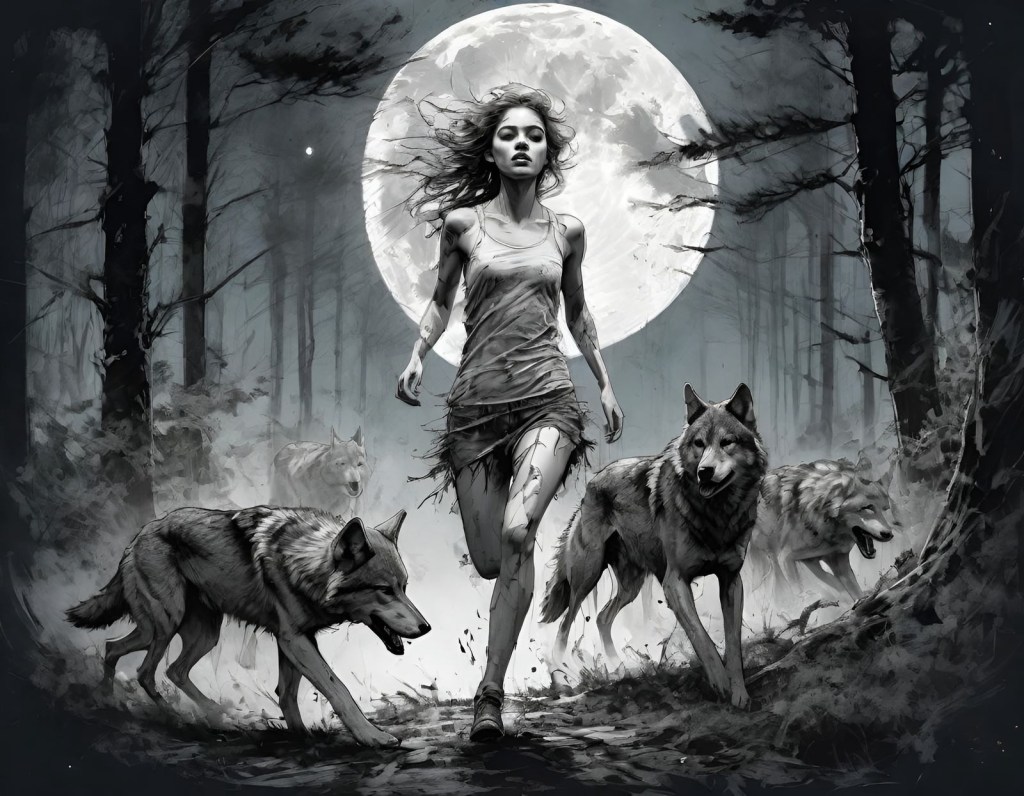
“I’ve dreamt I’m running through the Forest, my feet pounding on the pine 

I never feel so alive as I do when I’m outside 

I want to run with the wolves and howl at the moon 

Listen to nature answering back with its own magical tune

Footsteps that echo in ancient lore

As wild hearts beat forevermore

Like the pounding on a tightly locked door 

We move as one, both fierce and free

Fangs, paws and feet 

Bound by nature’s pure decree

That we should always be this wild free 

These majestic guardians of secrets forests far and wide 

No longer feel the need to hide 

As we hit the moss and fern, we tread so light

In harmony with the pale moonlight 

Streams sing tales of ages past

Of mountains climbed and valleys passed

We heed the call of nature’s song

In this wild dance, where I’ve always felt I belong

The wind’s caress upon our skin

A magical feeling that stirs within

The forest whispers ancient rhymes

Of a freedom found together for all our kind

Together with the wolves I soar

Me, an untamed spirit as never before

And In the heart of nature’s boundless dreams

I am part of this forest, the wild, nature and the fairy’s gleam”

Poem by me…

Video: Trail of Bigfoot Tracks Found in Snowy Maine Forest? | NewsRadio 1110 KFAB | Coast to Coast AM with George Noory

The BFRO are recognizing these prints as authentic bigfoot tracks. Some say they are deer tracks made to look larger from the snow.

Your thoughts?

An intriguing video from Maine shows a trail of sizeable prints found in a snowy forest and some suspect that the peculiar tracks could have been left behind by Bigfoot.
— Read on kfab.iheart.com/featured/coast-to-coast-am/content/2025-03-03-video-trail-of-bigfoot-tracks-found-in-snowy-maine-forest/